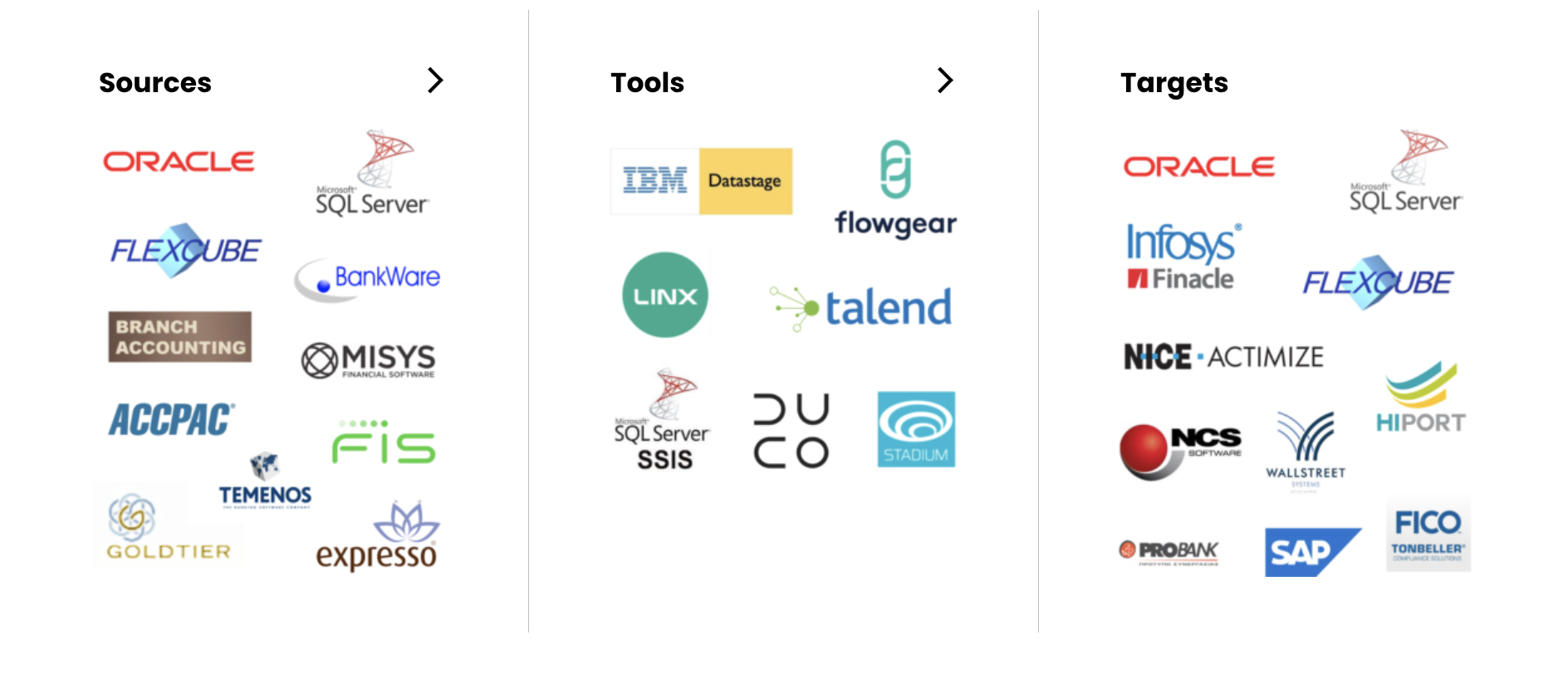
Our Data Migration Framework
DataShift is a powerful tool built to complement Digiata's robust data migration framework, giving any migration project a running start and ensuring efficiency and accuracy from day one. It streamlines the migration process with source and target configuration, data validation, data reconciliation and reporting capabilities, all within a modular design that lets you easily configure the migration process and workflow to suit your specific requirements.
Data validation and reconciliation rules can be designed and created quickly from the front end, while the transformation engine handles everything from simple data translations to complex transformations with all the power and flexibility you need. To round it off, DataShift's dashboards and reporting offer drill-down and drill-through capabilities, so you can trace every data migration activity back to its source.
ENGAGEMENT
We start by understanding your migration challenges and goals. Together, we identify the source systems, the target system and the tools. We also agree on the data governance rules that will guide the whole migration.
DISCOVERY
We define the detailed requirements and the migration approach. We plan how the data will be extracted, classify it by sensitivity and organise the business rules. Throughout, we follow clear compliance guidelines on privacy, fraud prevention and secure data transfer.
ANALYSIS & DESIGN
We examine your source data, build a data dictionary and map every source field to its target. We confirm the business and transformation rules with you and plan for backups and archiving. Governance is built into the design from the start, so your data stays accurate, trusted and ready for operations, decision-making and accounting.
CONFIGURATION & ANALYTICS
We build the automated migration solution: configuring data loads, applying the transformation rules and setting up reconciliation reports. We also create interactive dashboards that turn your data into insights. You can drill down, pivot and explore your data from different angles, all within the same governance and compliance framework.
ASSURANCE
We run test migrations and parallel reconciliations several times, fixing any issues along the way. Full rehearsals let us time the migration precisely and walk through the go-live sign-off process in advance, so production day holds no surprises.
DEPLOYMENT
We move your data to the new system in a final production run. Reconciliation reports and system testing confirm that everything is correct before you sign off. Then your legacy systems can be safely retired.